Breast Lift

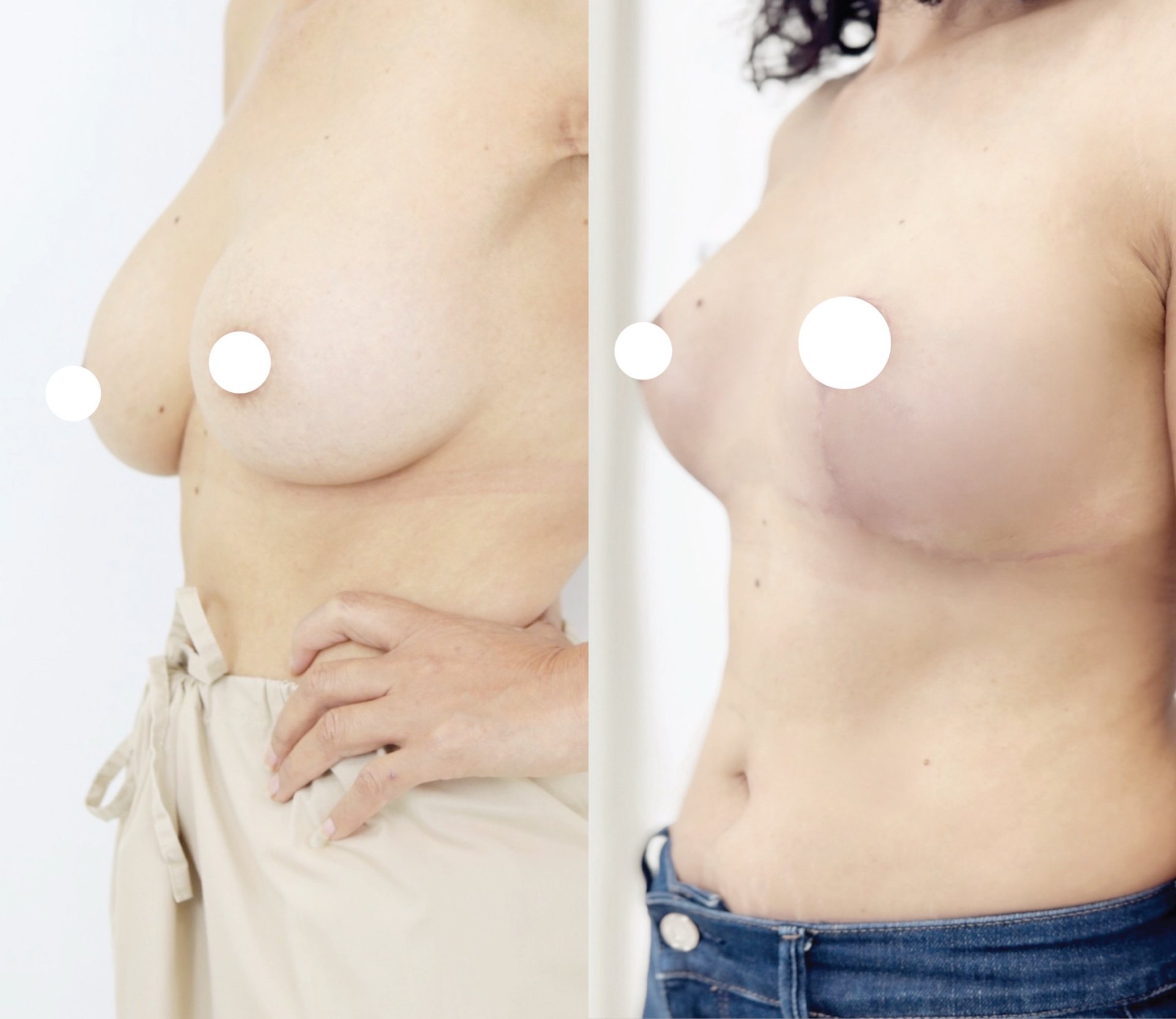
A breast lift (or mastopexy) is a surgical procedure designed to lift and reshape sagging breasts, restoring a youthful

and firmer appearance. It is often performed for women who have experienced changes due to aging, pregnancy, weight fluctuations, or breastfeeding. The procedure involves removing excess skin and tightening the remaining tissue to elevate the breasts and improve their shape and symmetry.


This procedure can be combined with breast augmentation to not only lift and reshape the breasts but also enhance their size and volume. By combining both procedures, women can achieve fuller, more youthful-looking breasts with improved contour and balance.

Breast Lift Techniques
Periareolar (Around the Areola) Technique

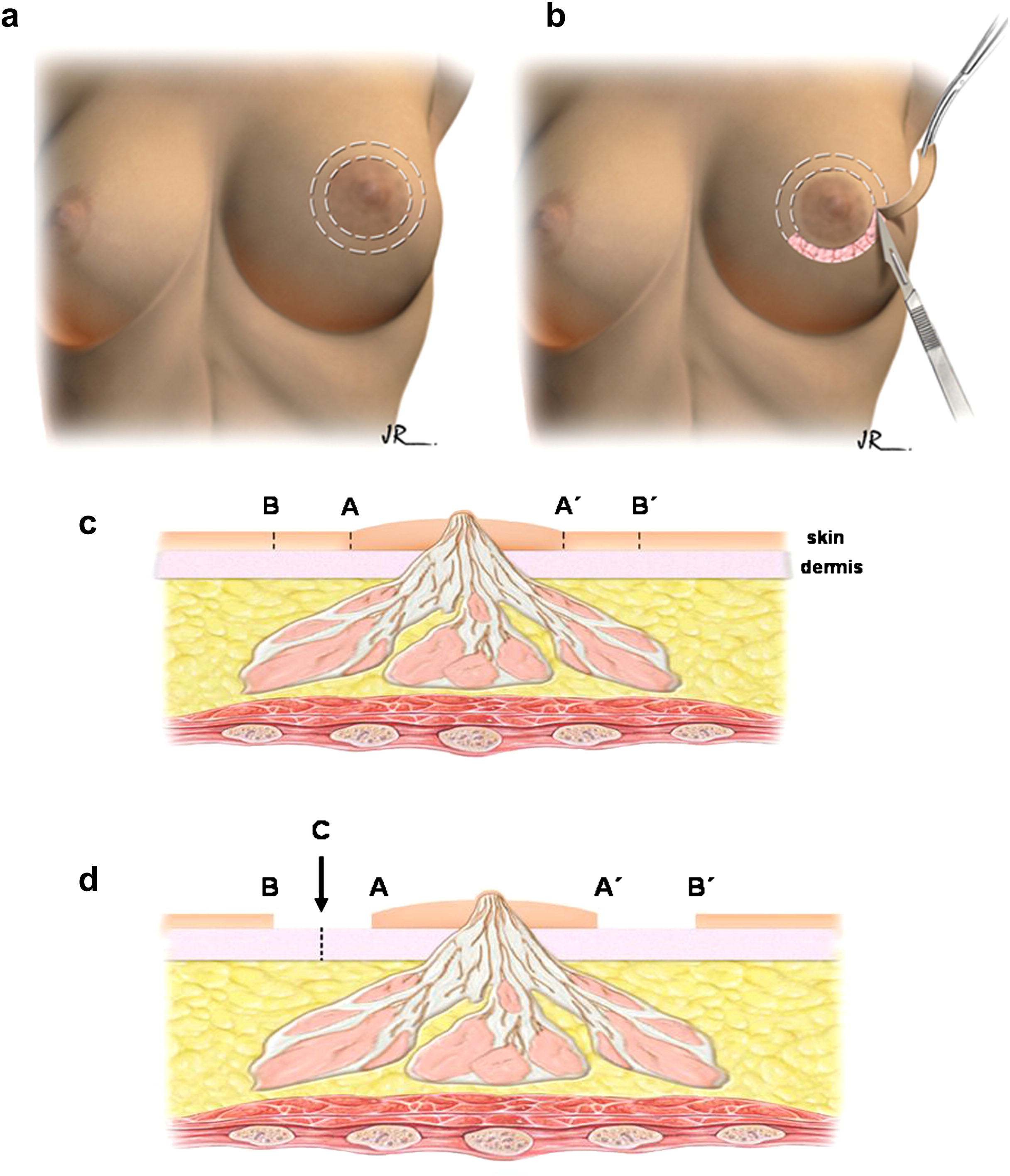
The periareolar breast lift technique, also known as the circumareolar technique, involves making an incision around the perimeter of the areola (the dark area surrounding the nipple). This technique is often used for women who have mild to moderate sagging and want a more subtle lift with minimal visible scarring.

- Incision Placement: The incision is made along the edge of the areola, typically only around the top half or full circumference, depending on the amount of lift required.

- Best For: Mild to moderate ptosis (sagging), where there is not much excess skin to be removed.

- Outcome: The procedure tightens and lifts the breast tissue, improves shape, and enhances breast symmetry. The scar, being along the edge of the areola, is usually well-hidden and blends with the natural pigmentation of the areola, making it less noticeable.


Benefits : Minimal Scarring because the scar is hidden around the areola, so it is less visible compared to other techniques, such as the anchor or vertical lift.
Ideal for Subtle Lifts: Perfect for those with only slight sagging or those seeking a modest enhancement.

-Can Be Combined with Augmentation: This technique is often combined with breast augmentation (implants) to enhance volume and achieve a fuller, more lifted appearance.


- Limitations : it provides a subtle lift, the periareolar technique may not be enough for women with significant sagging or loose skin. For more extensive lifts, other techniques like the vertical or anchor lift may be more appropriate.
 

Vertical (Lollipop) Technique

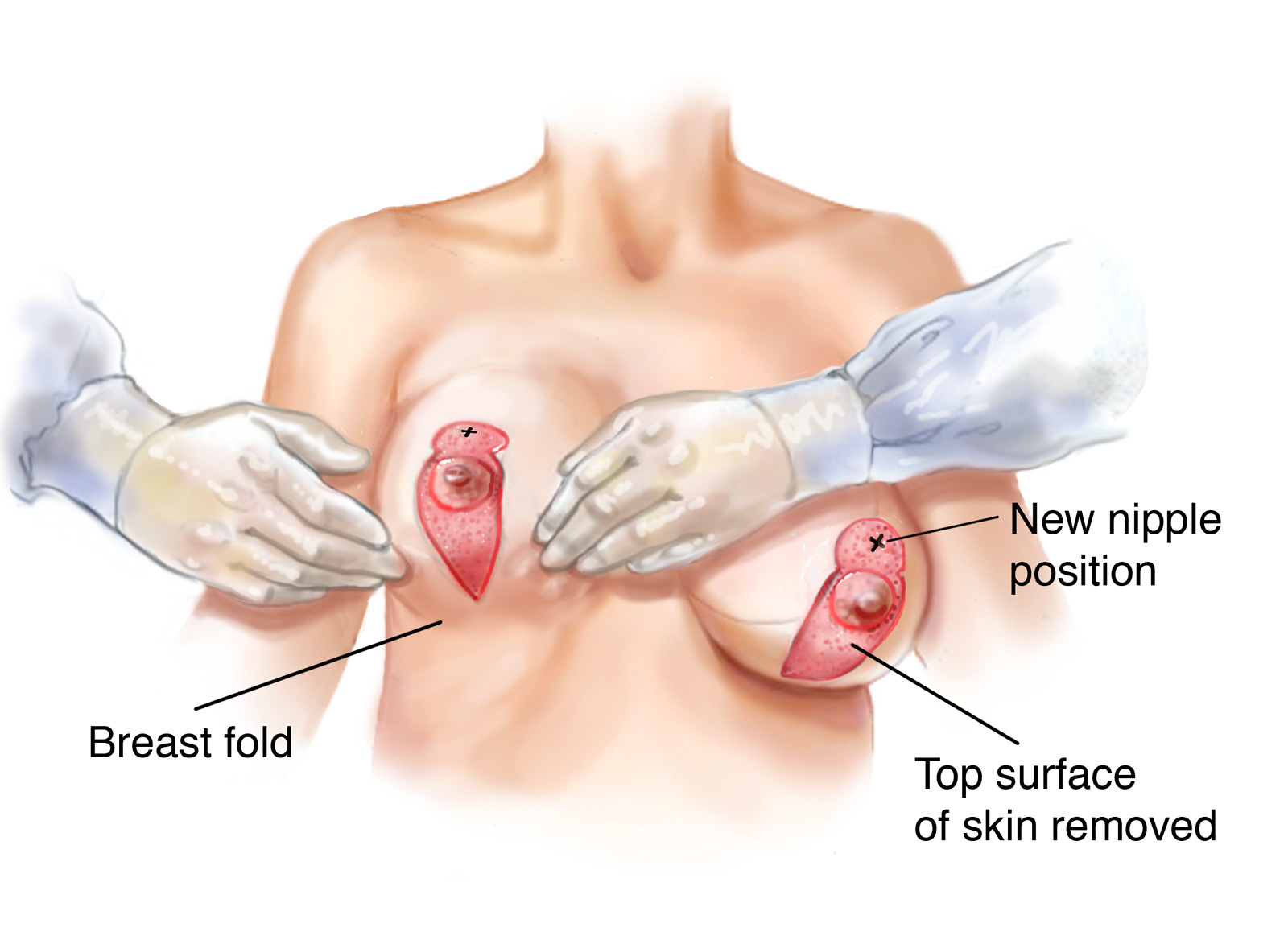
The vertical (lollipop) breast lift technique is a popular method for reshaping and lifting breasts with moderate sagging. It involves an incision that circles the areola and extends vertically down to the breast fold, creating a lollipop-shaped scar.
- Incision Placement: The incision is made around the areola (like the periareolar lift) and continues vertically down the center of the breast to the breast fold       (in the shape of a lollipop). This allows the surgeon to remove excess skin and reposition the breast tissue to achieve a more youthful, lifted appearance.
-Best For: Moderate ptosis (sagging) and breast reshaping. This technique is often chosen by women who want a more significant lift compared to the periareolar lift but who dont need the extensive incisions of an anchor lift.

  • The vertical lift offers a more noticeable improvement in breast shape and position than the periareolar lift. It lifts and reshapes the breasts while maintaining a natural, youthful contour. The vertical incision allows the surgeon to reshape the breast tissue more effectively than with a periareolar lift, providing both an elevation and a tightening of the breast skin.
Benefits:
  • Significant Lift: The vertical incision provides more lifting power than the periareolar technique, making it ideal for moderate sagging.
  • Minimal Scarring: While the scar is more extensive than the periareolar technique, it is still less noticeable than the anchor (inverted T) technique. The vertical scar is often well-hidden within the natural breast contour.
  • Natural Shape: This technique helps achieve a rounder, youthful breast shape without excess skin.


This Technique Can Be Combined with Augmentation: Like other breast lift techniques, the vertical lift can be combined with breast augmentation (implants) to add volume while improving shape and position.

  • Moderate Scarring: While the scar is more discreet than the anchor technique, it is still visible, especially if the skin is very thin or if the patient has darker skin.
    Not Ideal for Severe Sagging: For women with severe ptosis or a large amount of excess skin, the anchor lift may be more appropriate to achieve the desired results.
Anchor (Inverted T) Technique
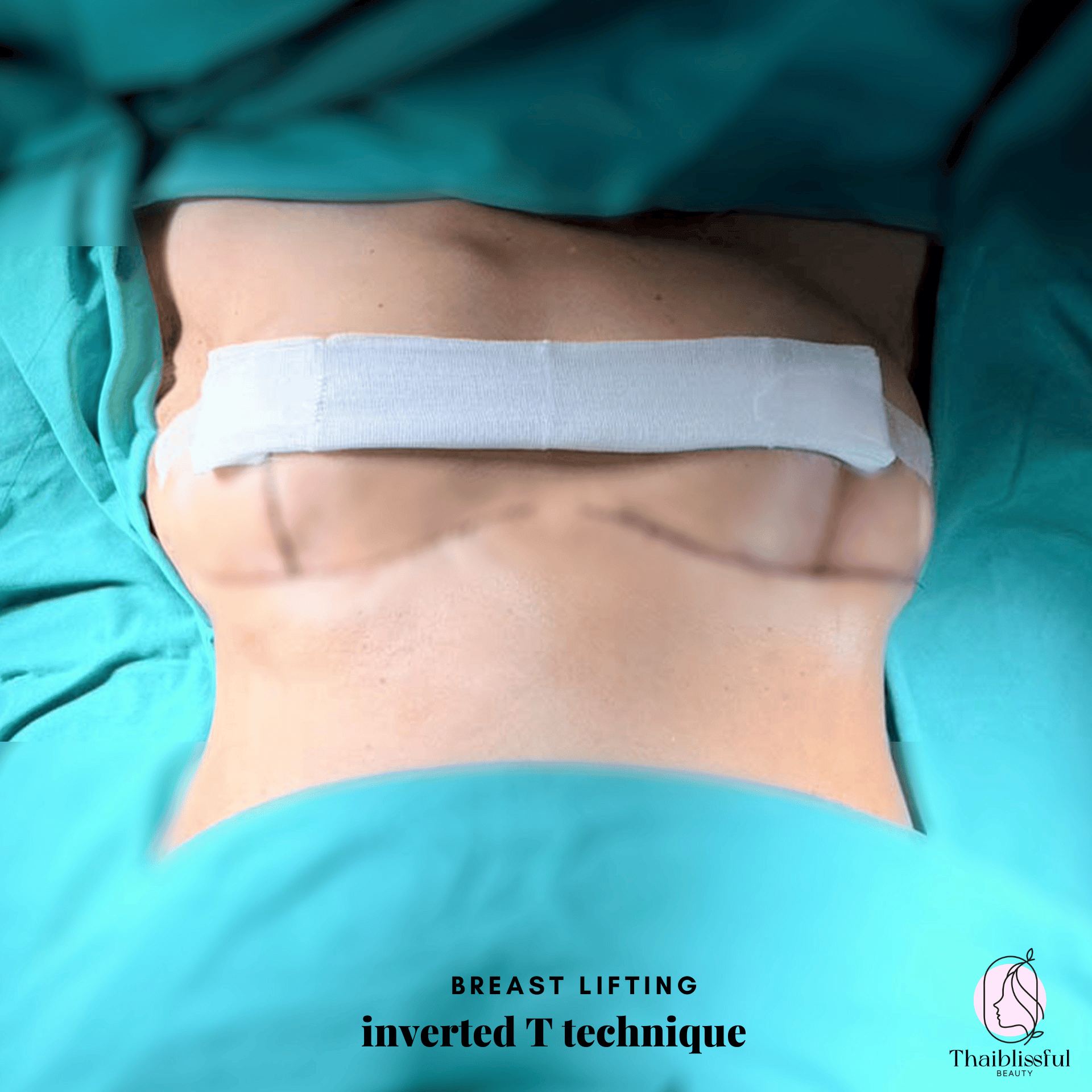
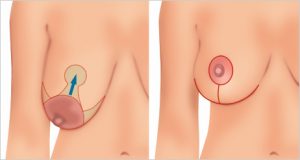
he anchor (inverted T) breast lift technique is the most comprehensive method for reshaping and lifting the breasts, especially for women with significant sagging or excess skin. It involves three key incisions: around the areola, vertically down the center of the breast, and horizontally along the breast fold (in the shape of an anchor or inverted T).
- Incision Placement: The anchor lift includes three incisions:
  • Around the Areola: A circular incision around the perimeter of the areola.
  • Vertical Incision:A vertical incision from the areola down to the breast fold.
  • Horizontal Incision: A horizontal incision along the breast fold.

This technique allows the surgeon to remove excess skin, reposition the breast tissue, and reshape the breast for a more youthful, lifted appearance.
- Best For: Women with severe ptosis (sagging) or significant excess skin, often after pregnancy, weight loss, or aging. This technique is also used for women who have larger breasts and need more extensive lifting and reshaping.

  • The anchor technique provides the most dramatic lift and reshaping of the breast. The extensive incisions allow the surgeon to remove a larger amount of skin and reposition the breast tissue for a fuller, firmer, and more youthful shape. The horizontal incision at the breast fold allows for more tissue removal, which is especially important for women with larger or drooping breasts.
- Benefits
  • Maximum Lift: The anchor lift provides the most significant elevation of the breasts, making it ideal for women with severe sagging or excess skin.
  • Breast Reshaping: This technique offers a more defined and youthful breast shape, correcting drooping and improving overall breast contour.

Can Be Combined with Augmentation: If you're also looking to increase breast volume, this lift can be performed alongside breast augmentation (implants), adding both lift and fullness.


Limitations: 

  • Visible Scarring: The anchor technique results in more visible scarring compared to other methods due to the three incisions, including the horizontal scar along the breast fold. However, with time, scars can fade, and experienced surgeons often place incisions in less noticeable areas.
  • Longer Recovery: Because its a more invasive procedure, recovery may take longer than with other lift technique

Recovery And After Care

Recovery from a breast lift is a gradual process, with most patients resuming normal activities within 6-8 weeks. Full recovery can take up to a year, especially for scars to fully mature. Be patient with your healing process and stay in close communication with your surgeon if you have any concerns.

- After Surgery you will be fitted with a surgical bra or bandages to help support your breasts and reduce swelling and you may feel groggy or nauseous as the anesthesia wears off, This is normal. You could have soreness, swelling, or tightness in your chest area. Your surgeon will prescribe pain medications or recommend over-the-counter pain relievers.

-In the First Week Rest is essential, You should plan for a few days to rest and avoid heavy lifting, straining, or raising your arms above shoulder height.

Its also important to avoid any activities that could put strain on your chest muscles. Swelling and bruising are common and can last for several weeks. Cold compresses can help alleviate swelling and discomfort.
- Weeks 2-4 you could do light activities like walking or gentle stretching. However, continue avoiding strenuous exercise or activities that could put pressure on your chest. You will need to wear a compression bra or surgical garment for a few weeks to help support your breasts and reduce swelling.

  • After 1- 2 Months You able to return to more normal activities, including light exercise,  you can do high-impact or strenuous activities after at least 1 year, depends on personal recovery conditions.
    - After 6 momths By this time, most of the swelling should be gone, and your breasts will settle into their permanent shape and size. Scarring will also start to fade, although it can take up to a year for scars to fully mature and become less noticeable. The incision scars are permanent, they will typically fade and become less conspicuous with time. we recommend scar treatments like silicone sheets or topical creams to promote healing.
    -Your breasts may continue to change shape and feel as the tissue settles. If you notice any significant changes, unusual pain, or concerns about your healing, contact your surgeon.
 A breast lift doesnt prevent future changes in breast shape due to aging, weight fluctuations, pregnancy, or gravity. However, the results can last for many years with proper care. The skin on your breasts may remain sensitive for a while after surgery, but this should improve over time. 


TIPS FOR GOOD RECOVERY

  • Follow your surgeons aftercare instructions carefully
  • Take pain medication as prescribed, but dont overuse it.
  • Wear a support bra 24/7 for the first few weeks, especially when sleeping.
  • Stay hydrated and eat a balanced diet to promote healing.
  • Avoid smoking and excessive alcohol consumption as they can impair healing.
  • Avoid hot tubs, swimming pools, or baths until your surgeon clears you to do so (usually after a few weeks).


- If you experience any of the following, contact your surgeon immediately

  • Increased swelling or pain that isnt relieved by prescribed pain medication.
  • Signs of infection such as fever, redness, or pus at the incision sites.
  • Unusual hardening or lumps in the breasts. Shortness of breath, chest pain, or dizziness, which could indicate a serious complication like a blood clot.


General Risk

Although breast lift surgery is generally safe, like all surgical procedures, it carries some risks and complications

- Infection : Any surgery carries the risk of infection, which may require antibiotics or additional treatments. Signs of infection include redness, swelling, warmth, or discharge from the incision sites. Having a proper aftercare, including keeping the surgical area clean, can minimize infection risk.
- Scarring : Scarring is inevitable with breast lift surgery, but the extent and visibility of scars can vary depending on the incision type, skin type, and healing response. But Over time, scars typically fade and become less noticeable. Your surgeon may suggest scar creams or silicone sheets to promote healing.
- Changes in Sensation : Some women experience changes in nipple or breast sensation after the procedure. This could be temporary or, in rare cases, permanent bacause of Nerve damage during surgery can cause numbness or heightened sensitivity in the breasts or nipples.
-Poor Healing or Delayed Recovery : In some cases, the skin or tissues may not heal as expected, especially if there's significant swelling or the patient doesn't follow aftercare instructions. Proper post-operative care, including wearing compression garments, avoiding heavy lifting, and attending follow-up appointments would help your recovery
- Asymmetry : There is a chance that your breasts may not be perfectly symmetrical after surgery, although this is relatively rare. Surgeons typically try to achieve balance, but some minor asymmetry is natural and can be improved with a secondary procedure if needed.
- Blood Clots (Deep Vein Thrombosis) : Any surgery poses a risk of blood clots forming, particularly if you are immobile for an extended period.
Prevention: Staying mobile and following post-surgery activity restrictions can reduce this risk.
- Hemorrhage or Seroma : Hemorrhaging or the formation of fluid collections (seromas) can occur. If this happens, additional treatments or drainage may be necessary.Be Careful monitoring and avoiding excessive physical activity during recovery are important to minimize this risk.
- Anesthesia Risks : As with any surgery that requires general anesthesia, there are risks related to the administration of anesthesia, such as allergic reactions, breathing difficulties, or complications from underlying health conditions.To prevent this we will assess your health beforehand and take steps to minimize these risks.
- Unfavorable Aesthetic Results : While most patients are satisfied with the results, theres always a chance that the outcome might not meet expectations, such as undesirable scars, uneven results, or dissatisfaction with the shape. Clear communication with your surgeon about your goals and expectations before surgery can help minimize this risk.
- Loss of Nipple/Areola Complex (Very Rare) : In rare cases, a complication may occur that leads to the loss of the nipple or areola complex due to compromised blood flow or infection. Careful planning and technique during surgery to ensure proper blood flow are key to minimizing this risk.

While complications from a breast lift are rare, it's important to be aware of the risks. Choosing a board-certified and experienced plastic surgeon significantly reduces the chances of these issues. Following your surgeon's aftercare instructions, attending follow-up appointments, and understanding the risks involved can help ensure the best possible outcome.

Before And After

Are you ready to enhance your beauty?

Lets take the next step together!

เว็บไซต์นี้มีการใช้งานคุกกี้ เพื่อเพิ่มประสิทธิภาพและประสบการณ์ที่ดีในการใช้งานเว็บไซต์ของท่าน ท่านสามารถอ่านรายละเอียดเพิ่มเติมได้ที่ นโยบายความเป็นส่วนตัว and นโยบายคุกกี้
Compare product
0/4
Remove all
Compare
Powered By MakeWebEasy Logo MakeWebEasy