Breast Lift
A breast lift (or mastopexy) is a surgical procedure designed to lift and reshape sagging breasts, restoring a youthful
and firmer appearance. It is often performed for women who have experienced changes due to aging, pregnancy,
weight fluctuations, or breastfeeding. The procedure involves removing excess skin and tightening the remaining tissue to elevate the breasts and improve their shape and symmetry.
This procedure can be combined with breast augmentation to not only lift and reshape the breasts but also enhance their size and volume. By combining both procedures, women can achieve fuller, more youthful-looking breasts with improved contour and balance.
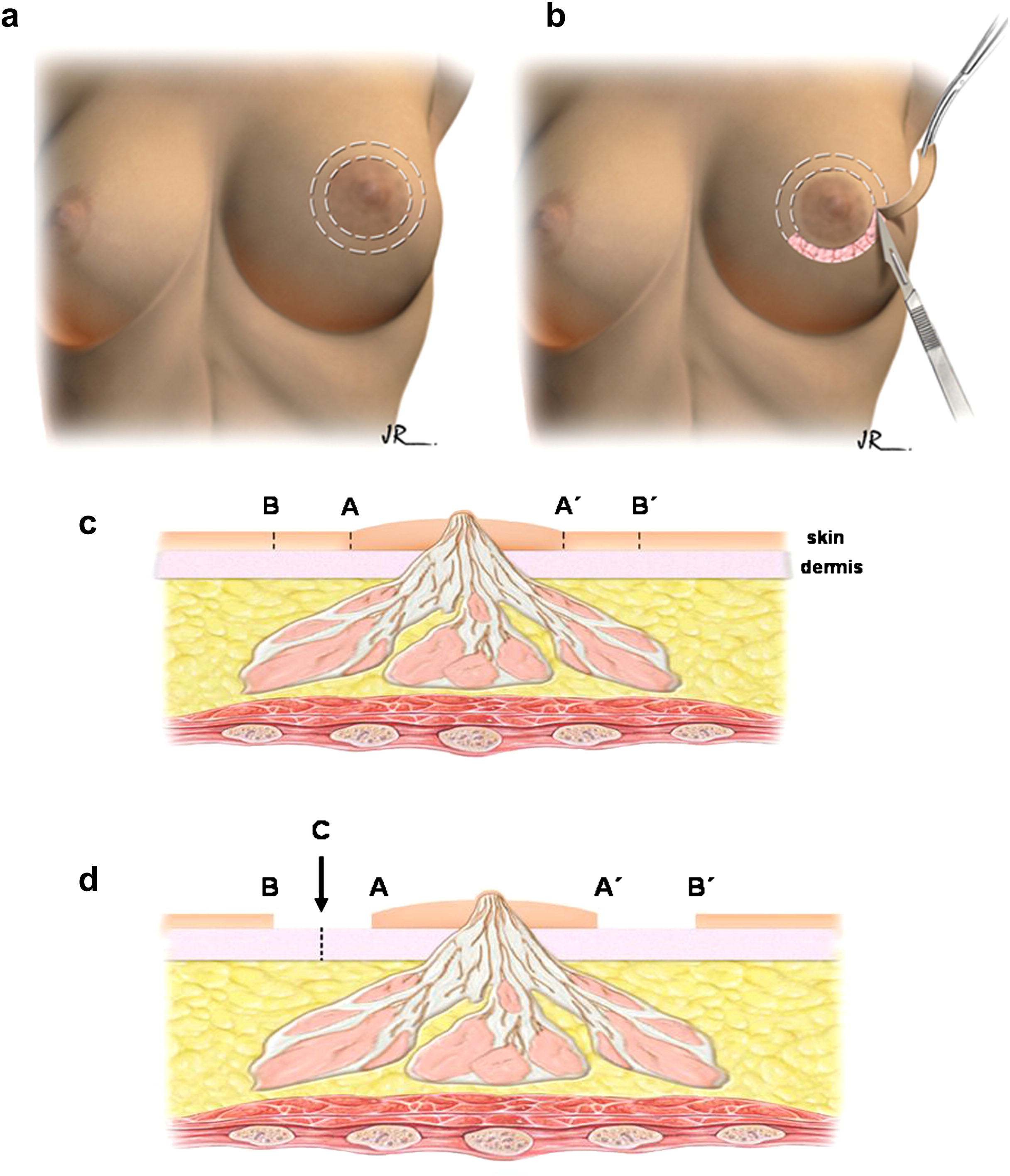
The periareolar breast lift technique, also known as the circumareolar technique, involves making an incision around the perimeter of the areola (the dark area surrounding the nipple). This technique is often used for women who have mild to moderate sagging and want a more subtle lift with minimal visible scarring.
- Incision Placement: The incision is made along the edge of the areola, typically only around the top half or full circumference, depending on the amount of lift required.
- Best For: Mild to moderate ptosis (sagging), where there is not much excess skin to be removed.
- Outcome: The procedure tightens and lifts the breast tissue, improves shape, and enhances breast symmetry. The scar, being along the edge of the areola, is usually well-hidden and blends with the natural pigmentation of the areola, making it less noticeable.
Benefits : Minimal Scarring because the scar is hidden around the areola, so it is less visible compared to other techniques, such as the anchor or vertical lift.
Ideal for Subtle Lifts: Perfect for those with only slight sagging or those seeking a modest enhancement.
-Can Be Combined with Augmentation: This technique is often combined with breast augmentation (implants) to enhance volume and achieve a fuller, more lifted appearance.
- Limitations : it provides a subtle lift, the periareolar technique may not be enough for women with significant sagging or loose skin. For more extensive lifts, other techniques like the vertical or anchor lift may be more appropriate.
The vertical (lollipop) breast lift technique is a popular method for reshaping and lifting breasts with moderate sagging. It involves an incision that circles the areola and extends vertically down to the breast fold, creating a lollipop-shaped scar.
- Incision Placement: The incision is made around the areola (like the periareolar lift) and continues vertically down the center of the breast to the breast fold (in the shape of a lollipop). This allows the surgeon to remove excess skin and reposition the breast tissue to achieve a more youthful, lifted appearance.
-Best For: Moderate ptosis (sagging) and breast reshaping. This technique is often chosen by women who want a more significant lift compared to the periareolar lift but who dont need the extensive incisions of an anchor lift.
- The vertical lift offers a more noticeable improvement in breast shape and position than the periareolar lift. It lifts and reshapes the breasts while maintaining a natural, youthful contour. The vertical incision allows the surgeon to reshape the breast tissue more effectively than with a periareolar lift, providing both an elevation and a tightening of the breast skin.
- Significant Lift: The vertical incision provides more lifting power than the periareolar technique, making it ideal for moderate sagging.
- Minimal Scarring: While the scar is more extensive than the periareolar technique, it is still less noticeable than the anchor (inverted T) technique. The vertical scar is often well-hidden within the natural breast contour.
- Natural Shape: This technique helps achieve a rounder, youthful breast shape without excess skin.
This Technique Can Be Combined with Augmentation: Like other breast lift techniques, the vertical lift can be combined with breast augmentation (implants) to add volume while improving shape and position.
- Moderate Scarring: While the scar is more discreet than the anchor technique, it is still visible, especially if the skin is very thin or if the patient has darker skin.
Not Ideal for Severe Sagging: For women with severe ptosis or a large amount of excess skin, the anchor lift may be more appropriate to achieve the desired results.
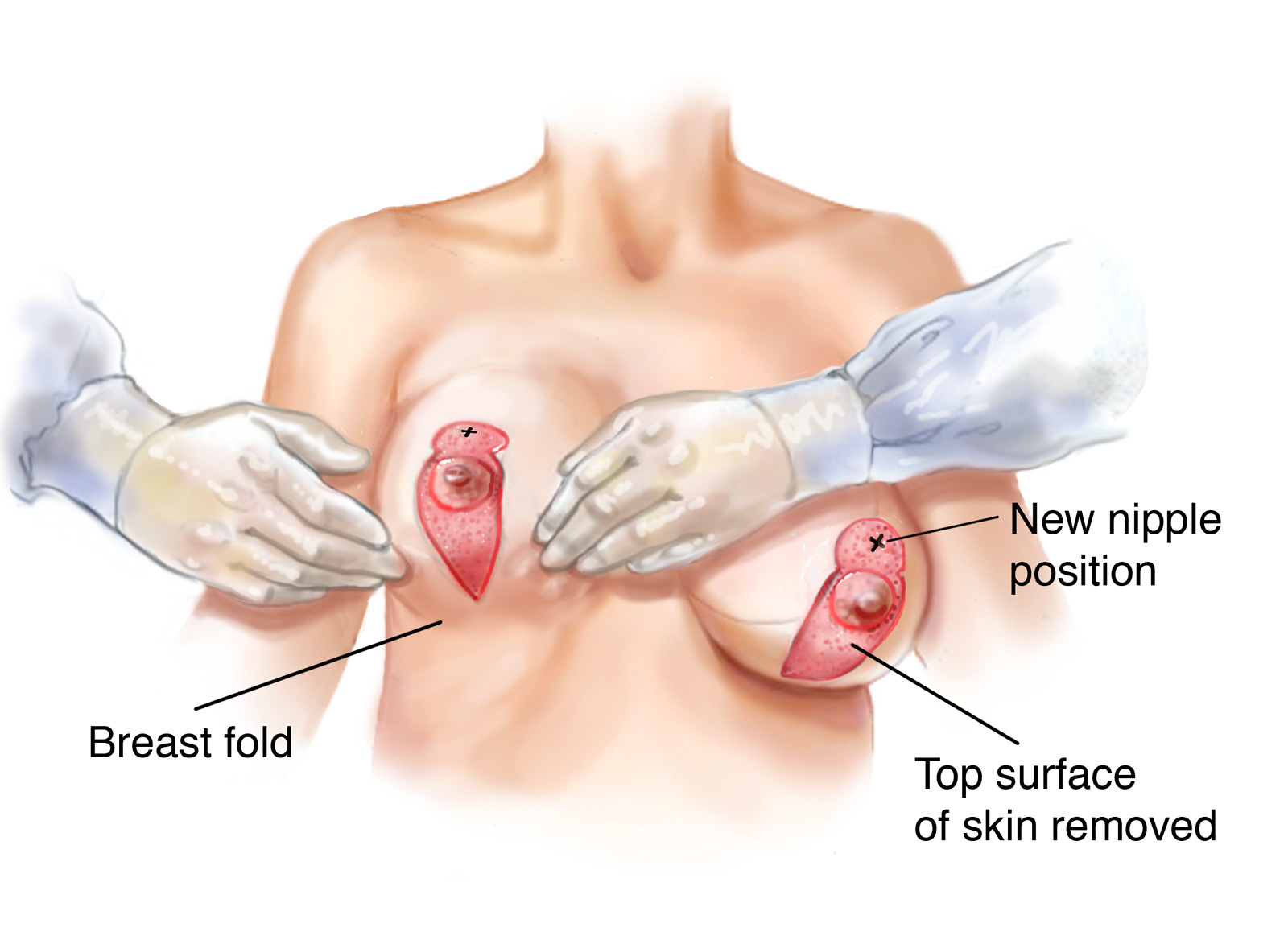
- Incision Placement: The anchor lift includes three incisions:
- Around the Areola: A circular incision around the perimeter of the areola.
- Vertical Incision:A vertical incision from the areola down to the breast fold.
- Horizontal Incision: A horizontal incision along the breast fold.
This technique allows the surgeon to remove excess skin, reposition the breast tissue, and reshape the breast for a more youthful, lifted appearance.
- Best For: Women with severe ptosis (sagging) or significant excess skin, often after pregnancy, weight loss, or aging. This technique is also used for women who have larger breasts and need more extensive lifting and reshaping.
- The anchor technique provides the most dramatic lift and reshaping of the breast. The extensive incisions allow the surgeon to remove a larger amount of skin and reposition the breast tissue for a fuller, firmer, and more youthful shape. The horizontal incision at the breast fold allows for more tissue removal, which is especially important for women with larger or drooping breasts.
- Maximum Lift: The anchor lift provides the most significant elevation of the breasts, making it ideal for women with severe sagging or excess skin.
- Breast Reshaping: This technique offers a more defined and youthful breast shape, correcting drooping and improving overall breast contour.
Can Be Combined with Augmentation: If you're also looking to increase breast volume, this lift can be performed alongside breast augmentation (implants), adding both lift and fullness.
Limitations:
- Visible Scarring: The anchor technique results in more visible scarring compared to other methods due to the three incisions, including the horizontal scar along the breast fold. However, with time, scars can fade, and experienced surgeons often place incisions in less noticeable areas.
- Longer Recovery: Because its a more invasive procedure, recovery may take longer than with other lift technique
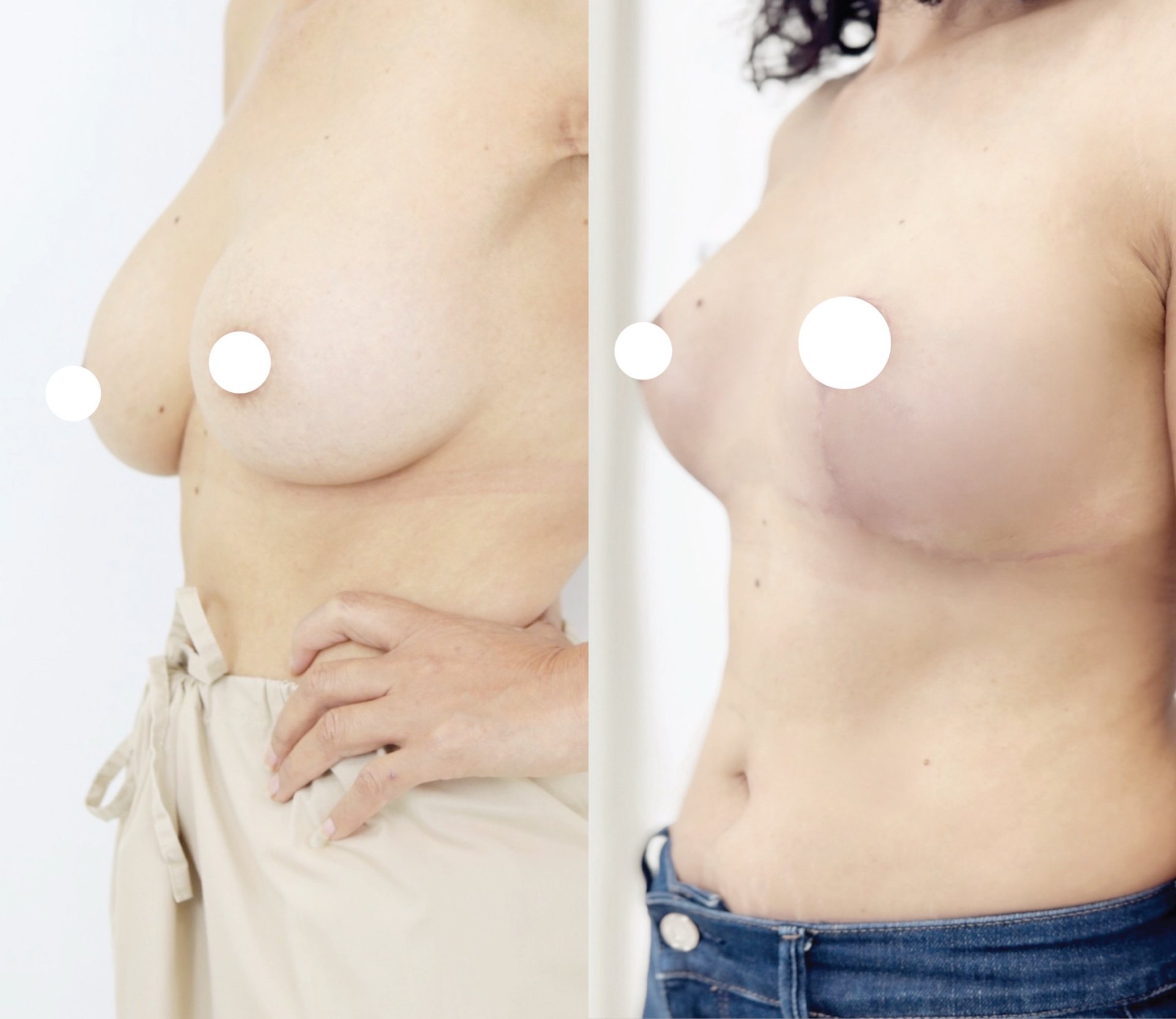
Before And After
Are you ready to enhance your beauty?
Lets take the next step together!
 MakeWebEasy